
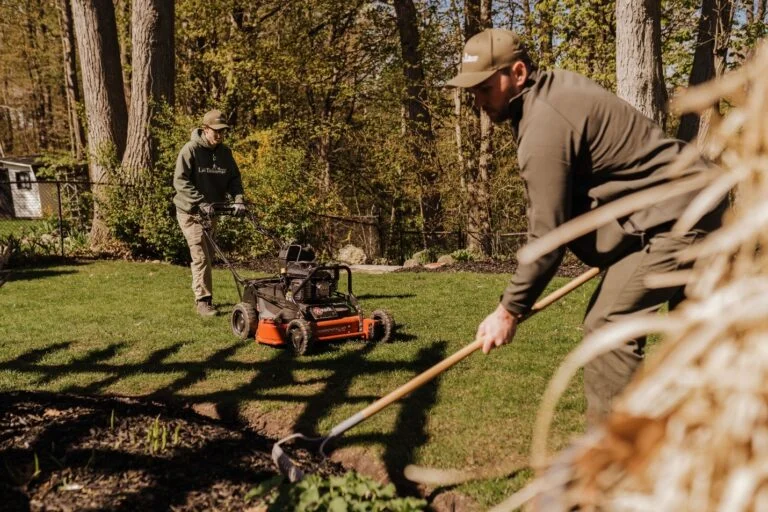
Snow mould is a common lawn fungus that shows up after the snow melts, especially in Southern Ontario. It usually looks like matted patches of straw-coloured or greyish grass. The good news: most cases clear up on their own with sunlight, airflow, and a light rake, as long as the lawn isn’t smothered under debris.
What Is Snow Mould?
Snow mould is a fungus that develops when grass stays cold, damp, and covered for a long time — usually under snow, ice, or heavy leaf cover.
It tends to appear in early spring because the snow traps moisture and blocks airflow, creating the perfect conditions for fungus to grow.
Snow mould is very common in Ontario and doesn’t usually mean your lawn is ruined.
What Does Snow Mould Look Like?
It’s tempting to get outside the first warm weekend of the year — but early spring lawns are fragile.
If you clean up while the lawn is still wet or frozen, you risk:
- Soil compaction (packed-down soil = weaker grass roots)
- Ripping out grass while raking
- Creating muddy, dead patches
- Making spring problems worse (like snow mould)
A good rule: if your lawn feels spongy, wait.
What Causes Snow Mould in Southern Ontario?
Snow mould is usually caused by a combination of:
✅ Long snow cover
✅ Poor airflow (shaded areas, thick grass, heavy debris)
✅ Leaving leaves on the lawn in fall
✅ Over-fertilizing late in the season
✅ Grass being too long going into winter
✅ Snow piles from shovelling sitting for weeks
It doesn’t mean you did anything “wrong” — Ontario winters just create the perfect setup for it.
What To Do If You Have Snow Mould (Step-by-Step)
Here’s the best way to handle snow mould without damaging your lawn:
Step 1: Wait until the lawn is dry enough
If your lawn is soggy or squishy, don’t rake aggressively.
Walking and raking too early can cause more damage than the fungus.
Step 2: Lightly rake the affected areas
Once the grass is dry, use a leaf rake and gently loosen the matted grass.
The goal is to:
- lift the grass
- improve airflow
- help sunlight hit the soil
Don’t rip into it — a light touch is best.
Step 3: Remove debris and leftover leaves
If leaves or twigs are sitting on the patch, clear them out so the lawn can breathe.
Step 4: Let it recover naturally
Most snow mould improves quickly once spring weather kicks in.
Within a couple of weeks, you’ll usually notice:
- greener growth
- less matting
- patch edges blending back in
Step 5: Reseed only if needed (later)
If you still have bare patches after the lawn starts growing (usually later April/May), you can overseed those areas.
Is Snow Mould Harmful? Will It Kill My Lawn?
Most of the time, snow mould won’t kill your lawn — it just makes it look rough for a bit.
If treated gently, the grass usually grows back once:
- temperatures rise
- sunlight increases
- the lawn dries out
However, you may need extra help if:
- the patch is large and bare
- the same areas return every year
- the lawn is heavily compacted or shaded
When Snow Mould Is a Bigger Problem
Snow mould can be more stubborn when:
- your lawn has thick thatch buildup
- snow piles last longer than normal
- the area gets very little sun
- the lawn was left too long in the fall
If that’s the case, the right fix isn’t just raking — it may need a spring treatment plan.
Need Help Fixing Snow Mould in Your Lawn?
If your lawn has large matted patches, recurring snow mould every spring, or bare spots that aren’t recovering, Lawn Troopers can help you get things back on track with spring gardening cleanup and lawn treatments across the GTA.
Contact us for a free online estimate.
FAQs
Snow mould is a lawn fungus that appears after snow melts, causing matted patches of straw-coloured or greyish grass in early spring.
Most snow mould isn’t serious and usually clears up naturally as the lawn dries out and gets more sunlight and airflow.
It looks like circular patches of flattened grass that may appear pale yellow, straw-coloured, or grey. Sometimes it has a light fuzzy coating.
Wait until the lawn is dry, then lightly rake the patch to lift matted grass and improve airflow. Most lawns recover within a few weeks.
Not right away. Let the lawn dry out and recover first. Too much fertilizer too early can stress the grass.
Yes, most mild snow mould clears up on its own once the lawn dries and spring temperatures rise.
Only if the area stays bare after the lawn starts actively growing (usually later April or May in Southern Ontario).
Keep leaves off the lawn in fall, avoid over-fertilizing late in the season, reduce thatch buildup, and avoid snow piles sitting too long in one spot.