
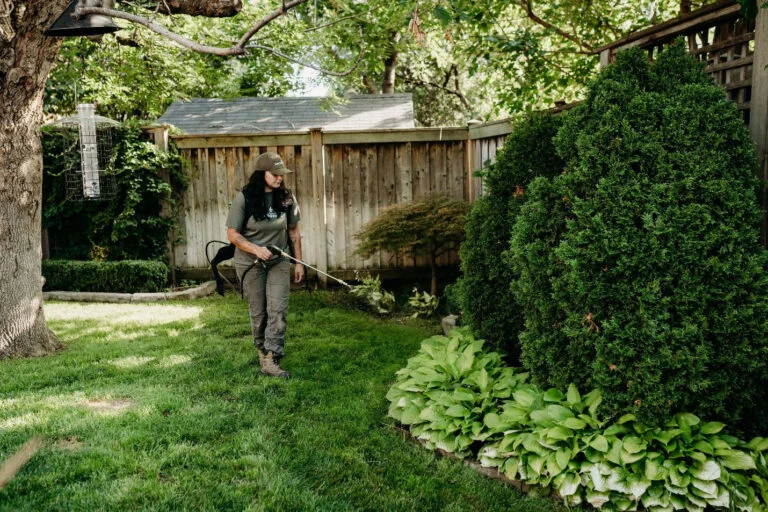
Seeing brown patches or chewed leaves? Learn the most common lawn diseases and garden bugs in Southern Ontario—and what to do next.
If your yard looks great for two weeks after spring planting and then starts to fall apart, you’re not alone. In Southern Ontario, late spring and early summer are prime time for two things: garden bugs and lawn diseases. The good news is most problems are manageable if you catch them early—and a lot of “treatments” aren’t needed once you fix the conditions that caused the issue.
The Fast Rule: Diagnose Before You Do Anything
Before you spray, spread, or rip everything out, do a quick check.
- Look at the pattern. A lawn disease often shows up in patches or rings. Insect damage often shows up as irregular thinning or chewed edges.
- Check timing. Problems that appear after warm nights, heavy dew, or frequent watering often point to disease.
- Inspect close up. Get down at grass level. Many issues look the same from the sidewalk.
Common Lawn Diseases in Southern Ontario
These are the usual suspects when people search “lawn diseases” in spring.
1. Snow Mould Hangover
Even after the snow is gone, snow mould can leave matted, straw-coloured areas behind.
What helps: gently rake to lift matted grass, improve airflow, and let it dry out. Most lawns grow out of it.
2. Red Thread
Looks like pinkish/red threads on grass blades, usually in thin areas.
What causes it: low nitrogen + stressed turf.
What helps: consistent mowing, avoid overwatering, and support healthy growth (without overdoing fertilizer).
3. Dollar Spot
Small tan spots that can merge into larger patches. Often shows up in warm weather with cool nights and heavy dew.
What helps: water early in the morning (not at night), reduce leaf wetness, and avoid mowing too short.
4. Rust
Orange “dust” on shoes or mower wheels. Common when grass is stressed or growing slowly.
What helps: mow regularly, bag clippings if it’s heavy, and improve lawn vigor.
The Lawn Disease Prevention Checklist
Most lawn diseases aren’t a mystery—they’re usually caused by the same conditions.
- Water early. Morning watering lets blades dry quickly. Night watering invites disease.
- Mow high. Taller grass handles stress better and dries faster.
- Don’t smother the lawn. Heavy thatch and compacted soil trap moisture.
- Avoid heavy nitrogen during heat spikes. Push growth too hard and you can make things worse.
Common Garden Bugs in Spring
Not every bug is a villain. Your job is to spot the ones that cause real damage.
Aphids
Tiny clusters on new growth; sticky leaves.
What helps: a strong spray of water, prune heavily infested tips, and let ladybugs do their thing.
Slugs
Shiny trails and ragged holes, especially in damp spots.
What helps: reduce hiding places (wet mulch piles, boards), water mornings, and hand-pick at dusk if needed.
Earwigs
Chewed petals and leaves, often overnight.
What helps: simple traps (rolled damp newspaper), reduce damp clutter, and keep mulch from touching stems.
Japanese Beetles (early season watch)
Skeletonized leaves later in summer, but early monitoring helps.
What helps: hand-pick into soapy water early in the day and reduce damage before it spreads.
When to Take Action
A good rule is: if the plant is still growing and damage is minor, don’t panic. Most gardens can tolerate some chewing.
Act faster if:
- a plant is being stripped quickly
- you see widespread lawn patches expanding week to week
- the same area stays wet and weak no matter what you do
Lawn & Garden Pests That Bother Humans
Some pests aren’t just hard on your plants—they make it harder to enjoy your yard. In Southern Ontario, ticks and mosquitos are the two big ones. The key is understanding what attracts them, then reducing those conditions so your property is less inviting.
Ticks
Ticks don’t “live in short grass” so much as they thrive where there’s shade, humidity, and cover. Think tall grass along fence lines, weedy edges, leaf litter, brushy corners, and the transition zones between lawn and garden beds. Wildlife (especially deer and rodents) can also increase tick activity on a property.
What helps
- Keep grass trimmed, especially along pathways and edges
- Reduce hiding spots: clear leaf piles, overgrown ground cover, and brushy corners
- Create a simple buffer: a clean edge or a small mulch/gravel strip between wooded areas and lawn
- Do a quick tick check after yard work or long grass exposure (especially kids and pets)
The result
A cleaner, drier, more open yard is simply less tick-friendly—and your high-use spaces (patio, play areas, walkways) feel safer and more comfortable.
Mosquitos
Mosquitos need two things: standing water to breed and shade/humidity to rest. Even small water sources matter—clogged gutters, saucers under planters, forgotten toys, low spots in the lawn, and birdbaths that aren’t refreshed regularly.
What helps
- Eliminate standing water weekly (dump, drain, refresh)
- Fix common water traps: gutters, low lawn spots, leaky hoses, planter saucers
- Thin dense growth near seating areas so air moves through and spaces dry faster
- Focus on your “hangout zones” first: patios, decks, porches, and paths
The result
Fewer breeding spots means fewer mosquitos over time—and your yard becomes a place you actually want to sit in during warm evenings.
If mosquitos are a consistent issue on your property, we offer seasonal support through our Mosquito Control services.
Keep Going with Your Spring Planting Momentum
Spring planting in Southern Ontario isn’t just about what you plant—it’s about timing, consistency, and simple habits that keep your yard looking “done” as everything takes off after your first frost-free date. If you followed the steps in this spring planting guide, you’ve already handled the hard part: you’ve got a plan, you’re planting at the right time, and you’re building a yard that looks intentional.
If you want to keep learning and tightening up your routine as the season moves forward, you can browse DIY advice anytime here: Lawn Care Tips.
And if you’d rather skip the trial-and-error (or you just want the finished look faster), these services line up with the exact tasks covered in this spring planting guide:
- Garden help with planning, planting, and seasonal upkeep: Gardening Services
- Support for lawn health during the spring growth surge: Lawn Treatments
- A clean, finished look for beds plus easier weed control and moisture retention: Mulch Installation
Whether you DIY it all or bring in a hand for the heavy lifting, the main takeaway is the same: work with the frost-free window, build structure first, then fill and add colour, and keep up with clean edges and consistent maintenance.
That’s how you get the best-looking yard on the street—and keep it that way.