
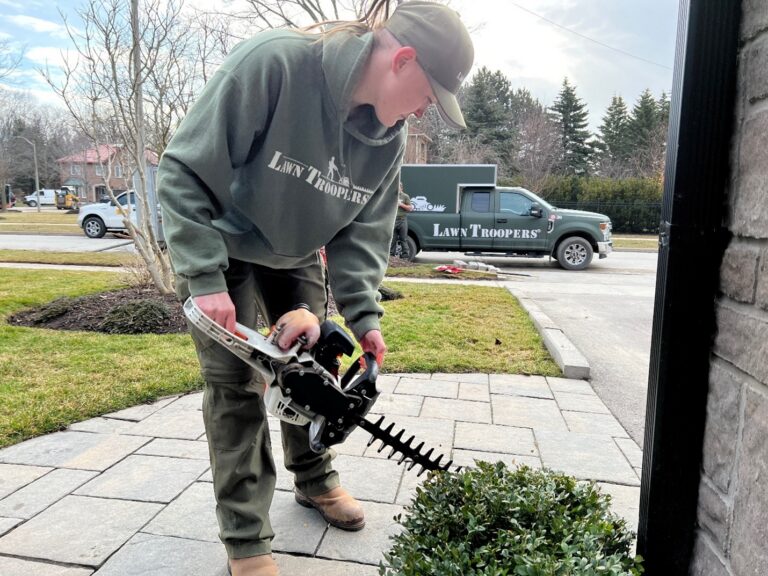
Early spring pruning: learn what’s safe to cut before frost-free date, what to avoid, and how to prune without losing blooms.
Spring pruning at the top of the season is safest when you focus on dead, damaged, or diseased wood and on shrubs that bloom on new growth. Avoid pruning spring-flowering shrubs (like lilac and forsythia) before they bloom, and don’t prune anything that’s actively pushing soft new growth right before a cold snap.
If you’re unsure, wait until buds swell and you can clearly see what’s alive—then prune lightly.
Why Early Spring Pruning Is Tricky in Southern Ontario
Early spring is messy: warm-ish days, frozen nights, surprise snow, and that one week where you think winter is done and then it isn’t. That’s why early spring pruning needs a “do no harm” approach. Two things matter most:
- Timing: Plants can be stressed when temperatures swing.
- Flowering type: Some shrubs set buds last year and you’ll cut the blooms right off.
The goal isn’t “make everything perfect.” It’s: remove problems, reduce risk, set up strong growth.
What You Can Safely Prune Before Frost-Free Date
Here’s what is usually safe for early spring pruning in Southern Ontario before the frost-free date—assuming you’re not cutting during a deep freeze and you’re using clean, sharp tools.
- Dead, damaged, or diseased branches (always fair game)
If it’s:
- clearly dead (brittle, dry, no buds)
- cracked or split
- rubbing against another branch
- visibly diseased
…go ahead and remove it. This is the “housekeeping” part of early spring pruning, and it helps plants focus energy on healthy growth.
Quick test: Scratch the bark with your fingernail. Green underneath = alive. Brown and dry = dead.
- Summer-flowering shrubs (they bloom on new wood)
These are good candidates for early spring pruning because they flower on growth made this year. Light-to-moderate pruning helps shape them and encourages fresh shoots.
Common examples:
- panicle hydrangea (Hydrangea paniculata)
- smooth hydrangea (Hydrangea arborescens)
- potentilla
- spirea that blooms in summer (variety-dependent)
If you’re not 100% sure what you have, prune lightly—or wait.
- Many trees (structure + safety cuts)
For most shade trees, early spring is a decent window to remove:
- deadwood
- crossing branches
- low hazards
But avoid heavy pruning during weird weather whiplash, and don’t prune oaks during high-risk disease seasons (oak wilt risk varies by region and guidance changes—when in doubt, ask a local arborist).
- Fruit trees (with a “go easy” mindset)
Apple and pear pruning is often done late winter to early spring. That said, if you’re not experienced, keep it simple:
- remove dead/damaged wood
- thin crossing branches
- don’t go wild
Big cuts can trigger stress and overgrowth later.
What You Should NOT Prune Before Frost-Free Date
This is where people accidentally ruin their own spring.
- Spring-flowering shrubs (you’ll cut off this year’s blooms)
These generally bloom on “old wood” (buds formed last year). If you prune now, you remove the flowers.
Don’t do early spring pruning on these until after they bloom:
- lilac
- forsythia
- magnolia
- many viburnums
- some hydrangeas (macrophylla/bigleaf types)
- weigela (often spring bloomers)
Rule of thumb: If it blooms early, prune after flowering.
- Anything with swelling buds you’ll miss (unless it’s deadwood)
Once buds are plump and ready, heavy pruning can push tender growth that gets zapped by a cold snap.
If you see lots of soft new shoots starting, keep early spring pruning minimal.
- Evergreens (usually not early-spring projects)
Most evergreen shaping is better later in spring when active growth begins. Early cuts can look rough and recover slowly.
The best timing cues (better than the calendar)
Calendars lie in Ontario. Use plant cues.
Good cues for early spring pruning:
- daytime temps staying above freezing more often than not
- buds swelling (but not fully leafing out)
- branches are flexible, not brittle from deep cold
- your yard isn’t soggy and soft (so you’re not trampling and compacting soil)
Bad cues:
- ground is still frozen-solid most nights
- you’re heading into a sudden cold snap
- the plant is already actively leafing out hard
How To Do Early Spring Pruning Without Messing It Up
Keep it basic and clean. Use the “small cuts” rule
For early spring pruning, aim for:
- small diameter cuts
- fewer cuts
- removing obvious problems first
If you’re removing more than ~20–25% of a shrub/tree canopy in one go, you’re probably doing too much.
Make clean cuts in the right spot
- Cut just outside the branch collar (the slight swelling where branch meets trunk)
- Don’t leave long stubs
- Don’t cut flush into the trunk
Clean your tools (especially between plants)
If you’re snipping anything suspicious, wipe blades with disinfectant between plants so you don’t spread disease.
“Is it too early to prune?” A quick decision checklist
If you want a fast yes/no:
Early spring pruning is usually OK if:
- you’re removing dead/damaged branches
- the shrub blooms in summer (new wood)
- buds are only slightly swollen
- there’s no major cold snap coming
Wait if:
- it’s a spring bloomer you want flowers from
- the plant is already pushing soft new growth
- you’re unsure what type of shrub it is
- the ground is soggy and you’ll trample everything
FAQ
Do early spring pruning when temperatures are mostly above freezing and buds are swelling but not fully leafed out—avoid pruning right before a cold snap.
For early spring pruning, focus on summer-flowering shrubs that bloom on new growth, plus dead or damaged branches on most shrubs.
Avoid early spring pruning on spring-flowering shrubs like lilac and forsythia until after they bloom, or you’ll cut off this year’s flowers.
Need a hand with early spring pruning?
If you’re not sure what’s safe to cut (or you’ve got overgrown shrubs, deadwood, or messy garden beds coming out of winter), Lawn Troopers can help with seasonal pruning and spring garden cleanups across Southern Ontario—so you get healthier plants without sacrificing this year’s blooms. Contact us for a free online estimate.